
How to Choose Professional Event Photography Services
Last Updated: October 25, 2026
Quick Summary
Professional event photography combines technical skill, creative vision, and anticipation to capture moments that matter most at your celebration. Professional event photography services typically include candid coverage, group portraits, detail shots, and sometimes interactive elements, with scope depending on your event type, duration, and needs.
Event photography rates typically range from $150-$375 per hour, with most photographers requiring a two-hour minimum booking.
Small private celebrations need two to three hours; medium events need four to six hours; weddings and major corporate galas often need six to ten hours or full-day coverage.
A shot list is the single most useful document you can hand a photographer, converting vague hopes into a prioritized, time-stamped plan.
Professional photographers carry at least two camera bodies and redundant cards, often shooting to dual card slots so every image exists in two places.
A common delivery range is 40-80 edited images per hour, with light color and exposure correction standard and heavy retouching limited to select frames.
Table of Contents
Understanding Professional Event Photography Services
Event Photography Pricing: What to Budget
Planning Your Event Photography Coverage Hours
Creating Your Event Photography Shot List
Build it in four passes
A usable template
Coordinate the three things photographers can't fix on the day
Share it early and walk it through
Using an Event Photographer Checklist Before You Book
Evaluating Portfolios and Technical Readiness
Score the portfolio on five criteria
Test technical readiness with direct questions
Read the contract for the things portfolios hide
Booking Your Event Photography Experience
Frequently Asked Questions
Understanding Professional Event Photography Services
Professional event photography services capture the moments that matter most at your celebration, whether it's a wedding, corporate function, graduation, or milestone event.
Professional event photography goes far beyond pointing a camera, it combines technical skill, creative vision, and anticipation, backed by backup equipment, venue lighting expertise, and the ability to direct groups without disrupting your event flow.
The difference between professional and amateur photography becomes obvious when you review the final images. They also capture the emotional arc of your event, from quiet moments of connection to energetic celebrations. The Zenfolio 2026 State of the Photography Industry report surveyed nearly 5,000 photographers across more than 90 countries and found that client satisfaction depends heavily on both technical quality and the photographer's ability to remain unobtrusive while capturing authentic moments.
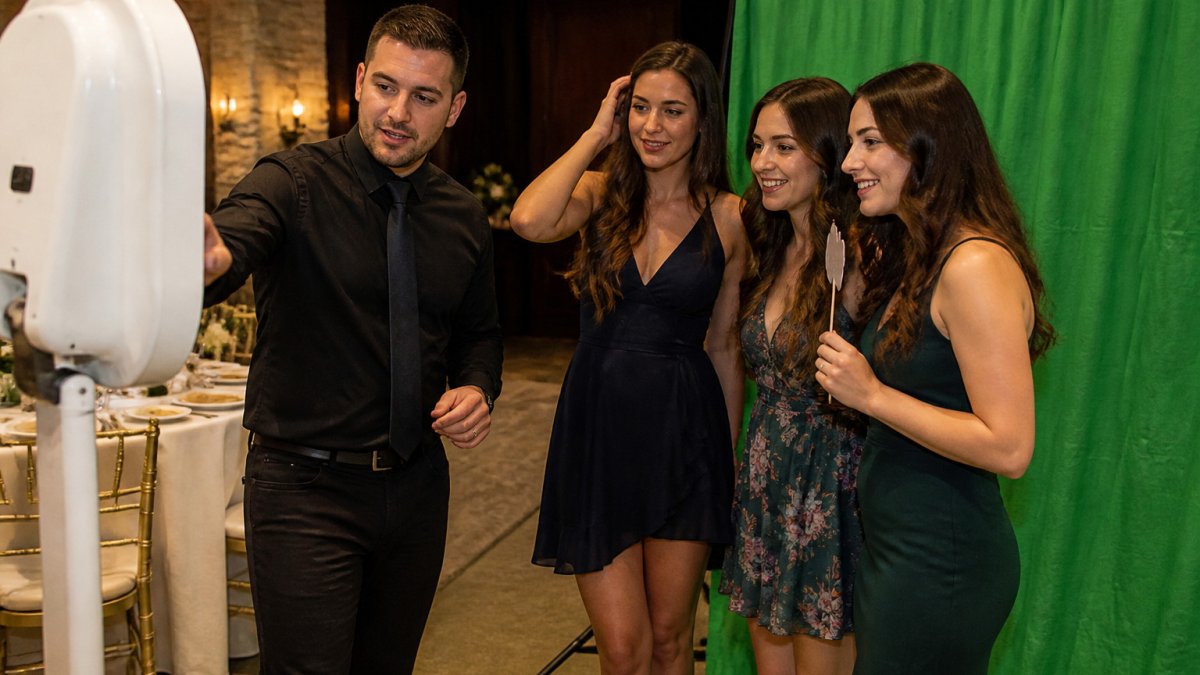
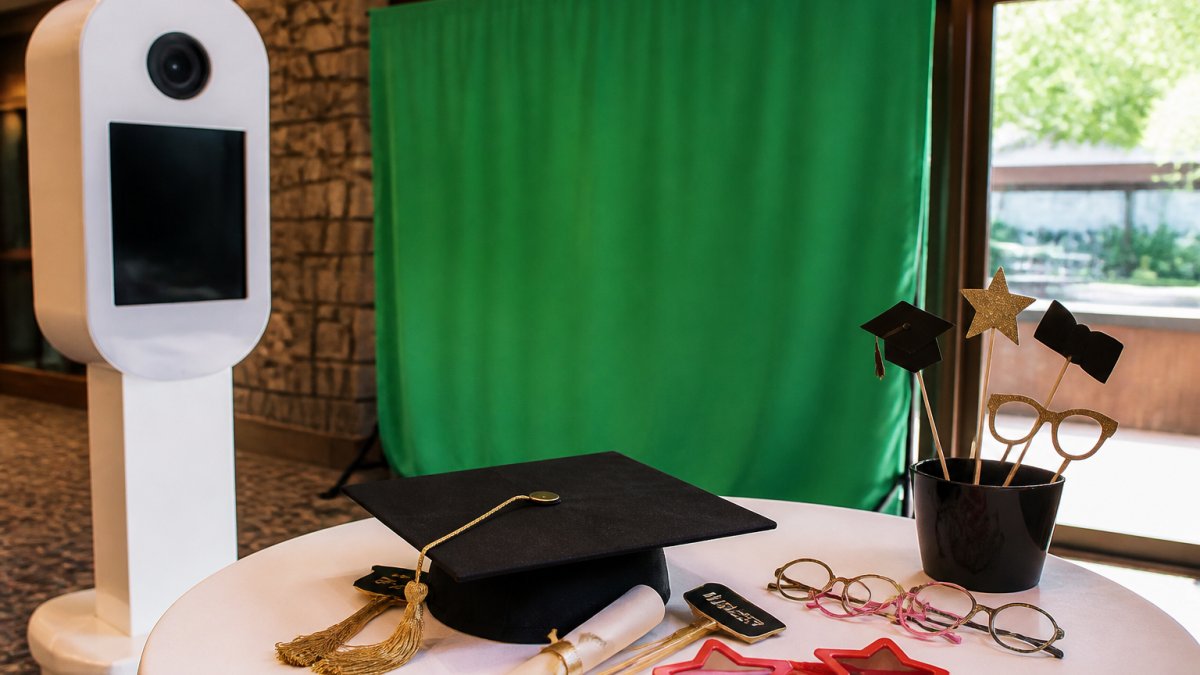
Professional event photography services typically include candid coverage, group portraits, detail shots, and sometimes interactive elements like photo booth experiences, with scope depending on your event type, duration, and needs.
Event Photography Pricing: What to Budget
Event photography pricing varies by event type, duration, location, photographer experience, and deliverables.
According to FilterPixel's 2026 pricing analysis, event photography rates typically range from $150-$375 per hour, with most photographers requiring a two-hour minimum booking. For full-day coverage, ProShoot's 2026 U.S. hiring guide reports rates between $900-$4,500 depending on experience level and market.
Experienced photographers in competitive markets charge more, and add-ons like albums, slideshow videos, on-site printing, or second-shooter coverage raise the total. Reyes Productions Green Screen Photo Booth offers customizable packages combining professional DSLR photography with interactive guest experiences.
Deliverables vary too, digital files versus prints, albums, or online galleries, so compare quotes on what's actually included.
Planning Your Event Photography Coverage Hours
How many hours of professional event photography you need depends on event type, guest count, and which moments matter most.
A common mistake is underestimating group portraits: with 50+ guests wanting organized photos, budget at least 30-45 minutes for that alone.
Identify your priority moments, networking at a corporate event, or a specific ceremony, and ensure the photographer is positioned to capture them from multiple angles.
Creating Your Event Photography Shot List
A shot list is the single most useful document you can hand a photographer, converting vague hopes into a prioritized, time-stamped plan they can execute without interrupting your event.
Build it in four passes
Timeline pass. List every scheduled moment chronologically with clock times: doors open, welcome remarks, keynote, awards, cake cutting, first dance, departure. Note where each happens and who is in frame, this is the backbone everything else attaches to.
People pass. Name the must-have groupings, immediate and extended family, executive team, award recipients, host committee, with approximate headcount and one named point person per group. A group of 30 takes roughly 10-15 minutes to assemble and shoot; a group of 8 takes 3-5 minutes.
Detail pass. List environmental shots that tell the story when no one is in frame: signage, table settings, centerpieces, program covers, sponsor boards, product displays, dessert table, gifts, and venue exteriors. These are fast to capture and easy to forget.
Priority pass. Mark every item Must, Should, or Nice so the photographer protects the Musts first if time runs short. Without this ranking, everything feels equally important and nothing gets guaranteed.
A usable template
Time | Moment | Location | Key people (point person) | Priority |
5:30 PM | Guest arrival and registration | Lobby | Host committee (Dana) | Must |
6:15 PM | Welcome remarks | Main stage | Executive director | Must |
6:45 PM | Sponsor recognition | Main stage | 6 recipients (Priya) | Must |
7:15 PM | Group photo, full company | Stage steps | All staff (~80) | Must |
7:30 PM | Dinner and table candids | Ballroom | , | Should |
8:30 PM | Awards presentation | Main stage | 4 honorees (Marcus) | Must |
9:00 PM | Dessert and detail shots | Ballroom | , | Nice |
9:30 PM | Departure candids | Exit | , | Should |
Adapt the rows to your event; the structure is what matters. A private celebration swaps in ceremony, family portraits, cake, and dancing. A conference swaps in registration, keynotes, breakout sessions, and networking.
Coordinate the three things photographers can't fix on the day
Key people. Give the photographer a named contact and backup for each must-have group, and confirm a day ahead that they know where and when to appear. The most common failure is a VIP who is never found.
Venue access. Confirm load-in time, parking, equipment staging, whether flash is permitted, and restricted areas. Ask whether the venue requires a certificate of insurance, many do, and it takes days to produce.
Schedule buffers. Build 10-15 minutes of slack around group photos. Events run late; a shot list with zero buffer collapses the moment the program slips.
Share it early and walk it through
Send the shot list at least two weeks ahead so the photographer can ask questions, scout the venue, and plan lenses and lighting. Then hold a 20-30 minute call to confirm point people, priority ranking, and the one or two moments you'd most hate to miss, that's where a generic list becomes a plan.
Pro Tip Print two copies of the shot list, one for the photographer and one for your on-site coordinator, and mark items off as they happen. A shared checklist prevents the end-of-night scramble to "get the ones we missed."
Watch Out Do not overload the list. A 200-item shot list for a four-hour event guarantees nothing gets the attention it needs. Cap Must items at what the coverage hours can realistically hold, and let the Should and Nice items fill the gaps.
Using an Event Photographer Checklist Before You Book
Before committing to a professional event photographer, use a structured checklist to compare candidates fairly and avoid overlooking key factors.
Review their portfolio for variety in lighting, group sizes, and event types like yours.
Discuss backup plans: backup cameras and lenses, insurance, and their policy if they fall ill and can't attend.
Ask about interaction style, visible and directing versus unobtrusive.
Evaluating Portfolios and Technical Readiness
A portfolio shows the photographer's best 1% of images. Learn how asking the right vendor questions helps you assess photographer quality and avoid costly mistakes.

Score the portfolio on five criteria
Consistency, not peaks. Flip through 30-40 images from a single event, not a highlight reel spanning years. Is exposure and color consistent frame to frame? Do the candids hold up next to the posed shots? Visible quality swings between images are a warning sign.
Low-light and mixed-light work. Most venues are dim and mix tungsten, LED, and daylight. Look for reception, dinner, and evening images with clean skin tones, minimal noise, and backgrounds not blown out by flash, and ask for a full gallery from an evening event, not just the best three frames.
Candid coverage. Count how many images show people unaware of the camera, laughter, conversation, reactions. A portfolio heavy on posed lineups suggests a photographer who directs more than observes. Both styles are valid; know which your event needs.
Group-photo execution. Large groups are technically hard: even lighting across 50 faces, no one blinking, no one hidden. Look for a 30+ person group shot and inspect the edges and back row.
Storytelling sequence. A strong event photographer delivers a set that reads like a narrative, arrival, anticipation, peak moment, celebration, wind-down. If the portfolio is a random assortment of pretty frames, the delivered gallery may feel the same.
Test technical readiness with direct questions
Backup equipment. Ask how many camera bodies and lenses they bring, and whether they have ever had a card or body fail mid-event. A professional carries at least two bodies and redundant cards, often shooting to dual card slots so every image exists in two places.
Lighting kit. Ask what they bring for dark rooms: on-camera flash, off-camera strobes, continuous LED, or fast prime lenses. The answer tells you whether they plan for your venue or hope for the best.
Insurance and contingency. Ask for a certificate of insurance and their plan if they are ill or injured on the day. Many venues require the certificate; a professional will produce it without hesitation and have a vetted backup photographer on call.
File handling. Ask how images are backed up during and after the event, and in what formats they are delivered. RAW capture with dual-card backup and a cloud or off-site copy is the standard to expect.
Read the contract for the things portfolios hide
Technical skill is only half the evaluation. Confirm in writing: delivery timeline (commonly two to six weeks), number of edited images, license (personal vs. commercial), portfolio-use rights, and cancellation/reschedule terms, these clauses matter more than any single portfolio image.
Key Takeaway A strong evaluation answers three questions: Can they handle my venue's light? Will they show up with redundancy if something fails? And will the delivered gallery look like the portfolio I was shown? Ask for a full gallery from a comparable event, that single request separates confident professionals from polished marketers.
Booking Your Event Photography Experience
Once you've selected a photographer, booking should be straightforward. Submit an inquiry to move forward with booking photography services.
Confirm everything in writing, date, time, location, coverage duration, specific shots, deliverables, and total cost.
Share your event schedule and venue info, parking, access, restricted areas, special requirements, and lighting limitations, so they can plan accordingly.
Most photographers send a final confirmation email a week or two before the event; be responsive to it.
Coverage Factor | Typical Duration | Best For |
Arrival and key moments | 2-3 hours | Small private events |
Ceremony plus celebration | 4-6 hours | Medium events with specific focus |
Full event coverage | 8-10 hours | Large weddings, all-day corporate events |
Extended coverage | 10+ hours | Multi-day events, destination celebrations |
Frequently Asked Questions
How much should I budget for professional event photography services?
Event photography rates typically range from $150-$500 per hour, with full-day packages starting around $900-$4,500, depending on your location, photographer experience, and coverage needs. Most photographers require a two-hour minimum booking. Your budget should account for the event type, number of photographers needed, and any add-ons like prints or albums. Contact providers directly for quotes tailored to your specific event.
How many hours of event photography coverage do I actually need?
Coverage hours depend on your event type and priorities. Receptions typically need 4-6 hours to capture setup, key moments, and guest interactions. Corporate events may need 2-4 hours for speeches and networking. Ceremonies plus receptions often require 6-8+ hours. Consider which moments matter most, ceremony, cocktail hour, dinner, dancing, or awards, and discuss your shot list with your photographer to determine the right duration.
What should I include in my event photography shot list?
Your shot list should cover essential moments: group portraits, candid interactions, detail shots of decorations and food, key events (toasts, first dance, award presentations), and environmental shots showing the venue. Include specific requests like family combinations, couple poses, or team photos. Share this list with your photographer weeks in advance so they understand your priorities and can plan their positioning and timing accordingly.
What questions should I ask before hiring an event photographer?
Ask about their experience with your event type, equipment and backup plans, number of photographers provided, turnaround time for photos, image delivery format, usage rights, and cancellation policies. Request references from similar events and review their portfolio for image quality and style consistency. Clarify what's included in their package versus add-on costs.
Pricing & Booking
Add socalphotoboothevents.com as a preferred source on Google →
Comments